The Future of Fashion is personal, and that is not a luxury
A problem I have lived personally
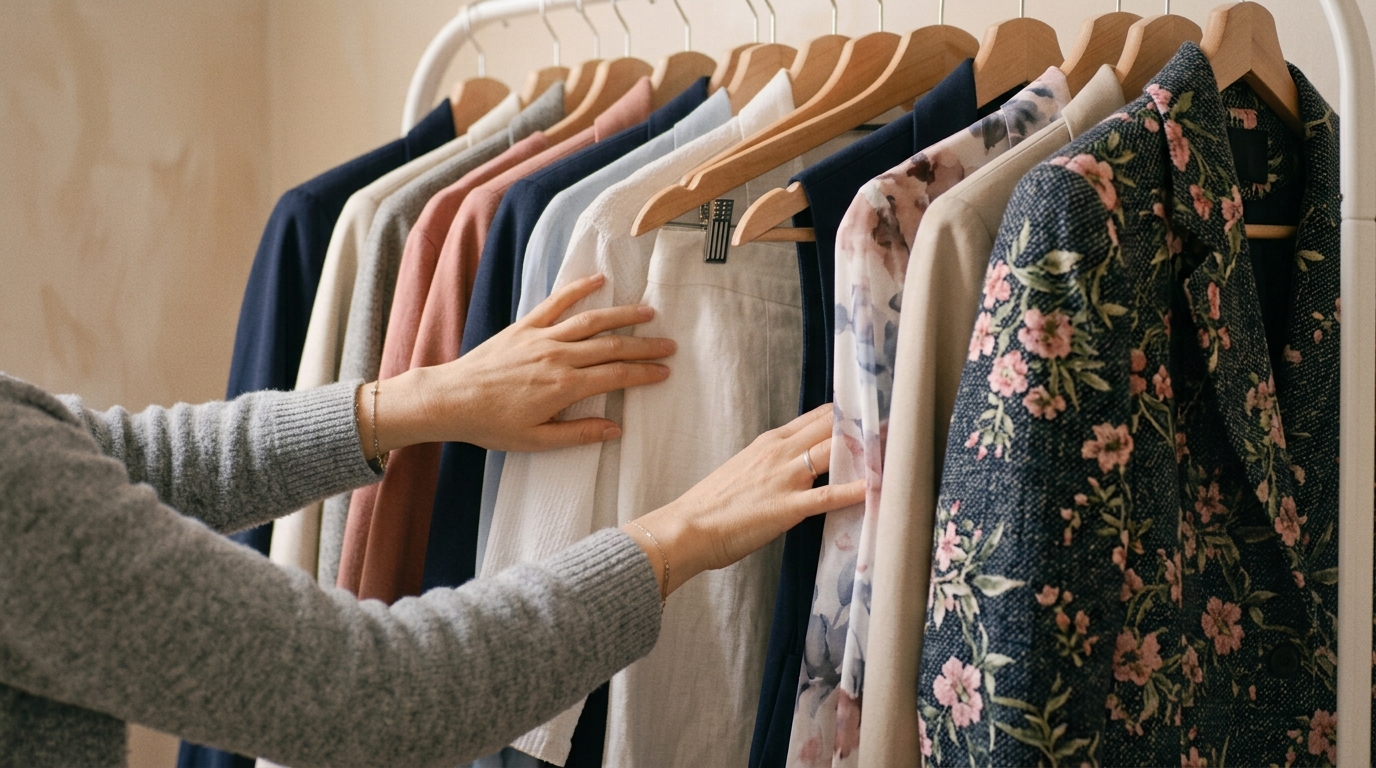
I have always had difficulty finding well-fitted clothes in my own style. Jackets especially. The one I described in my first article (the tropical leaf print, the perfect fit, twenty-plus years of wear) is the exception that proves the rule. Most of the time, buying a jacket means accepting a compromise: close enough, if I adjust my expectations of what fitting actually means.
I am not unusual in this. The fashion industry’s standard sizing system was built on a narrow demographic template and designed primarily to serve mass production of a certain region. To allow the same pattern to fit a range of bodies adequately, if imperfectly. It has been refined and extended over decades, but its fundamental limitation has never been resolved: a garment made to a standard pattern is a compromise for almost everyone who wears it.
For many people this is a minor inconvenience. For many others, people whose bodies fall outside the narrow range the system was designed around, it is a daily experience of exclusion. The message sent by a system that does not accommodate your body is not neutral. It is specific and cumulative.
This is personal for me. And it is also, I have come to believe, one of the most underexplored dimensions of sustainable fashion. Because fit is not just a comfort issue. It is a value issue, and therefore a sustainability issue.
What the data confirms
The Dutch National Wardrobe Audit of 2025 gave us two data points that belong together and are almost never read that way.
The number one reason people love a garment: comfort and fit (43%). The number one reason they discard one: it no longer fits properly (31%). Not because it wore out. Not because it went out of style. Because it stopped fitting.
The industry has known this for decades. It has not solved it, because the solution requires a different production architecture, not a wider size range. Adding more sizes to a standard pattern system does not solve the fundamental problem. It extends the compromise to more bodies.
Real personalisation, the kind that changes how a garment fits, feels, and moves, requires that the garment is made to the specific measurements, proportions, and preferences of a specific person. It requires production that starts with a person, not with a pattern.
Why personalisation was always described as a luxury
During my time at art school, I was already fascinated by this question: how do you deliver personalisation at the scale of mass production? At the time, these were considered opposites. You could have one or the other. Personalisation meant bespoke, bespoke meant expensive, and expensive meant available only to the wealthy.
I spent the first decade of my career trying to understand whether this was actually true. And I concluded that it is not, but that resolving the contradiction requires rethinking the production system, not just the product.
The cost of personalisation in conventional fashion is high because of the steps it requires: individual pattern drafting, hand fitting, skilled labour at every stage. When those steps are removed, when the production system is designed for personalisation from the start, rather than retrofitted with it afterward, the variable cost of customisation drops dramatically.
One of the reasons I founded MYCOTEX was to make a garment to your specific measurements using the same process, the same equipment, the same materials as making a standard size. The mould is simply set to different parameters. Custom fit is not a premium option. It is the default.
The body scan as starting point
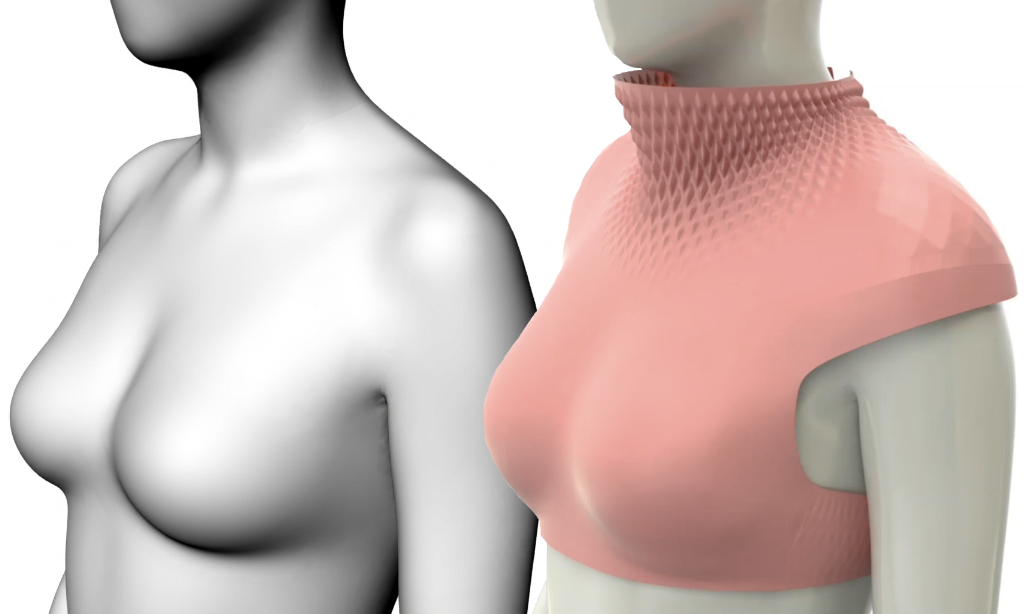
The future I am designing for is one in which body scanning is routine. We are already partway there: smartphone apps can generate reasonable body models from photographs. Specialist scanning equipment, increasingly accessible in retail environments, produces highly accurate three-dimensional models. Body scanning at least every six months (as your body changes) is a reasonable expectation for the next decade.
What changes when you start with an accurate digital model of a person’s body is everything downstream. You know exactly how much material to develop. Not approximately, but precisely. You know the exact mould dimensions. You can calculate material to the gram, eliminating overproduction at the individual garment level. Fit-related returns, currently one of the largest cost and waste drivers in e-commerce fashion, become largely unnecessary.
The garment that results fits in a way that no standard-sized garment can. Not because more effort was put into fitting, but because the production process was designed around the actual body from the beginning.
What mould-based production opens up in design
Conventional garment construction is constrained by the logic of flat pattern pieces assembled into three-dimensional forms. The shapes achievable are limited by the geometry of cutting and sewing. You cannot construct a perfect rounded shoulder by sewing. Certain organic curves require either complex darting or significant material waste. The seam – always present, always a potential weak point – is a constraint on form as well as a feature of construction.
Mould-based production removes these constraints entirely. Forms can be as complex, rounded, and organic as the mould allows. Surfaces can be textured in ways integral to the material itself, not applied afterward as a finish. The inside of the garment is as clean as the outside, because there are no seams to hide or manage.
This is not a technical footnote. It is a genuine design freedom that changes what fashion can look like. And it is why, from the beginning, I was more interested in MYCOTEX’s unique aesthetic possibilities than in making it look like existing materials. New production systems should produce new aesthetics, not copies of what already exists.
The magic of the right dress, and what it tells us
I mentioned in Article 3 that I watch Say Yes to the Dress. I want to return to that admission here, because it is directly relevant to what personalisation actually delivers.
The moment I watch for in that programme is when someone puts on the right dress and something immediately, visibly changes. The posture lifts. The expression opens. The person in the mirror is recognisably, unmistakably more themselves. I find it genuinely moving. Every time.
That transformation is what a well-fitted, correctly personal garment does. It is not decoration. It is confirmation. The garment confirms something about who you are that you already knew but needed to see reflected back.
This is what I want to make available to everyone; not just brides with generous budgets, not just people lucky enough to find the one garment that happens to fit them in a shop. A production system that starts with your body and your choices creates the conditions for that experience as a default, not an exception.
“The moment in Say Yes to the Dress when the right dress goes on and the person visibly becomes more themselves — that is not television drama. That is the confirmation that a garment was made for you. I want that to be available to everyone.”
For every body; not as a campaign, but as a design fact
One of the things I care most about in this work is what it means for people whose bodies are poorly served by standard sizing. Very tall, very short, plus-size, unusually proportioned, disabled, or simply shaped in ways that do not match the narrow template the industry was built around.
For these people, the experience of shopping for clothes is often demoralising in ways that people within the standard range cannot fully appreciate. Finding garments that fit is difficult, expensive, and emotionally costly. The message sent by a system that consistently does not accommodate your body is not neutral.
A production system that starts with your body scan and makes garments to your actual dimensions does not need a campaign about body positivity. It simply works for every body, because every body is the input. Inclusion is not a value added afterward. It is built into the architecture.
Ready to build the material future?
I work with brands, research organisations, and investors serious about making the transition real, not just talking about it.
Let’s Collaborate