Why materials alone will never be enough, and what I did about it
The diesel train problem
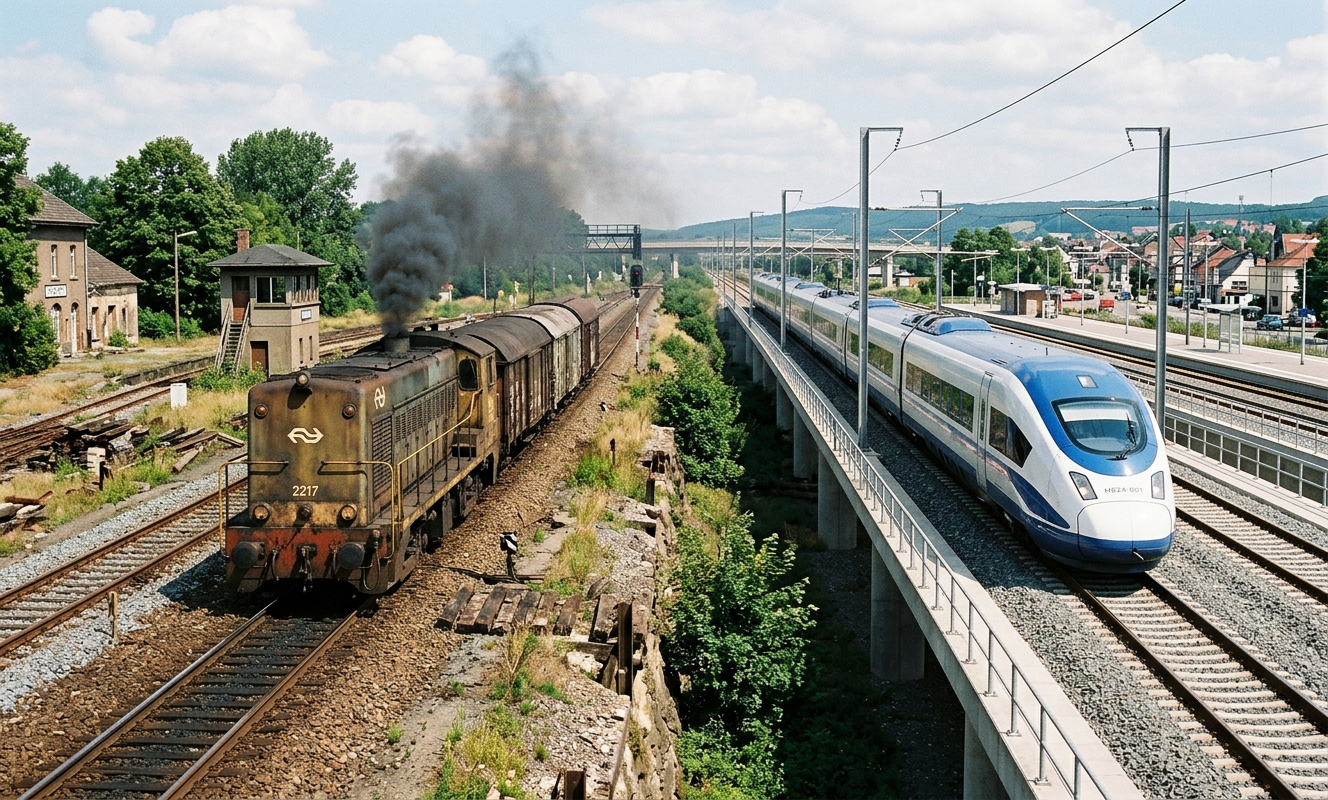
Imagine the fashion and textile industry as a diesel train. It has been accelerating for two hundred years. Everyone knows it is bad for the environment and the people working on it. It cannot be stopped. So, while it runs at full speed, engineers are hanging off the sides trying to fix the wheels, change the water, replace the broken windows.
This is the current state of material innovation in fashion. The industry is investing enormous intelligence in developing better materials; bio-based alternatives, recycled fibres, cleaner dyes. These efforts are valuable. I respect and support the people doing this work. But they all share the same fundamental assumption: the train stays the same. The supply chain underneath the materials is not questioned.
In practice, introducing new materials into a conventional supply chain is far harder than the presentations at innovation conferences suggest. Whilst running a factory you have to learn about new material properties, retrain staff, adjust machines, and update processes, without slowing production. The friction is enormous. Many promising innovations stall at exactly this point: not because the material is inadequate, but because the integration cost into an existing system is too high.
What the industry actually needs is not a better material for the existing train. It is a different vehicle altogether.
“It is like trying to fix a diesel train whilst it is running. What we need is not a better version of the same train. We need to build the high-speed railway alongside it.”
Looking outside fashion for the answer
The way I came to build a different supply chain was not by studying fashion more carefully. It was by looking elsewhere.
I have a habit, one I developed over many years, of walking into hardware stores, plumbing suppliers, industrial catalogues, and biotechnology facilities and asking: what could this do for fashion? The solutions to fashion’s problems are rarely going to come from inside the fashion industry, because the people inside it are, reasonably, focused on running the existing system.
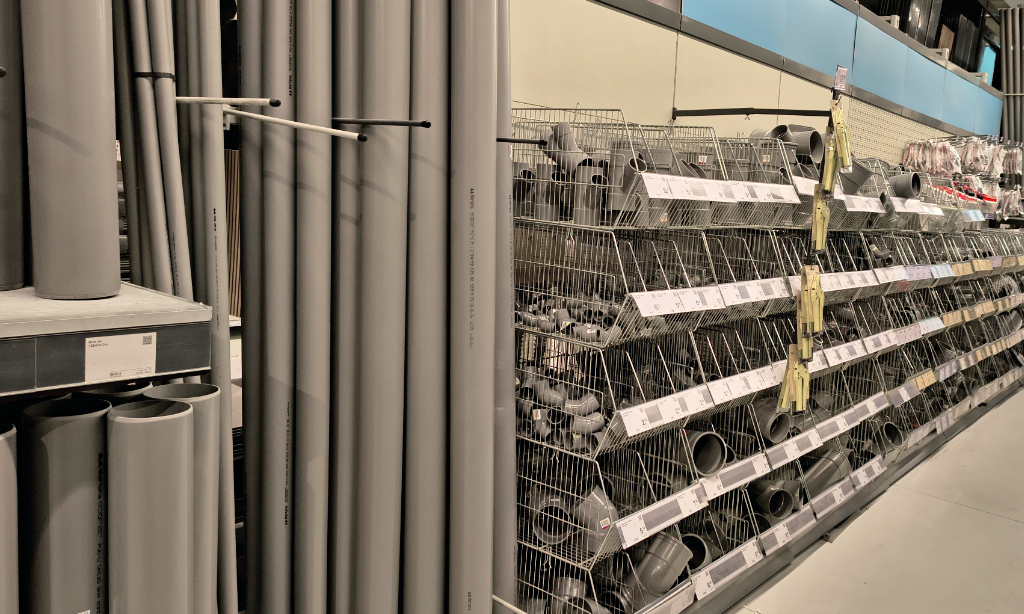
Years before MYCOTEX, I used plumbing pipes from a hardware store to construct the structural core of tutu-shaped lighting fixtures for a Sleeping Beauty installation. The pipes were dimensionally perfect, structurally appropriate, and economically obvious, once you stopped thinking of them as plumbing pipes and started thinking of them as structural tubes. Nobody in the art world was using them that way. They were just sitting in the plumbing aisle.
That habit of looking in the wrong aisle is how MYCOTEX came together. Liquid fermentation for growing biomass was already a proven, scalable industrial process, used by companies like DSM to grow mycelium for enzymes used in dyeing and cleaning products. I did not invent fermentation. I asked: what if we grew the mycelium for the material itself, instead of for its by-products?
Spraying materials onto moulds was already established in industrial manufacturing. Rigid moulds as the basis for forming flexible materials allowed for automation that flat textile production cannot achieve, because drape and flexibility make robotics very difficult. I did not invent moulds. I asked: what if we used them for garments?
Combining existing, proven, scalable technologies in a new configuration is not the most glamorous form of innovation. But it is, I have found, the most reliable.
What the MYCOTEX supply chain actually is
Let me describe it concretely, because I think the contrast with conventional production is the clearest argument for why systemic change matters more than material improvement.
A conventional cotton garment travels through approximately five distinct processes in typically three or four countries: growing and ginning the fibre, spinning it into yarn, weaving it into fabric, cutting the pattern, and sewing the garment. Each step involves transport. A garment might begin as fibre in Egypt, become fabric in China, and be assembled in Bangladesh before arriving on a European shop floor. Dozens of stakeholders. Months of lead time. Waste at every stage; material waste, time waste, overproduction to cover forecast uncertainty.
The supply chain I developed for MYCOTEX begins with measurements, or with 3D scans, of which a 3D mould is created. Based on the mould the exact amount of biomass needed is calculated. Biomass is grown through liquid fermentation and mixed with natural pigments. This recipe is sprayed onto a specific mould and dried. The product comes off the mould finished and ready: seamless, perfectly fitted, made from fully compostable material. No spinning, no weaving, no cutting, no sewing. No pesticides or chemicals. Production in days rather than months.
This is not a marginal improvement on what exists. It is a different architecture. And the environmental results follow from the architecture, not from adding sustainability credentials to an otherwise unchanged process.
Working with existing infrastructure; not against it
The most common objection to radical supply chain change is infrastructure: you cannot ask manufacturers to scrap their equipment and start again. The capital investment is enormous. The skills required for new systems take time to develop. The risk of disruption to ongoing production is real.
This is a legitimate concern, and one I have deliberately designed around.
The MYCOTEX production process works with existing industrial equipment. The spraying mechanism draws on processes already used in manufacturing. Mould-based production is adjacent to 3D printing or vacuum forming. The fermentation infrastructure draws on existing biotechnology capability. An industrial partner is a company with deep roots in footwear manufacturing, precisely because their existing machinery and expertise can be adapted to this production method with manageable investment.
The high-speed railway uses some of the same stations as the diesel line. It does not require a completely new landscape. It requires a different vehicle and a willingness to build the new track.
Local production: the resilience argument, not just the green one
The COVID-19 pandemic made deeply clear what the fashion industry had known abstractly: long, geographically dispersed supply chains are fragile. When borders closed and container ships queued outside ports, manufacturers who depended on materials from the other side of the world discovered that their supply chains were one disruption away from paralysis.
I want to make the local production argument on commercial resilience grounds, not just environmental ones, because I think it is more persuasive to the people who need to hear it.
True local production means both material and manufacturing happening within the same geography. Moving your factory to Europe while your materials still come from Asia does not solve the problem, as many manufacturers discovered. The combination of automation and new supply chains like MYCOTEX make genuine local production economically viable in a way it was not a decade ago.
Automation is often framed as a threat to jobs. I understand that concern and addressed it in article 4. But automation also makes local production possible at competitive cost, which means the alternative to automation is not more local jobs, it is continued offshoring. The choice is not between automation and employment. It is between automation that serves a local economy and offshoring that does not.
The same logic, applied beyond fashion
Everything I have described for fashion applies equally to footwear, interior, automotive, and industrial components. The manufacturing challenge is the same: produce complex shaped objects, in variable quantities, with minimal waste, from materials that do not persist indefinitely in landfill.
Interior textiles in commercial and hospitality spaces are, effectively, fast fashion for rooms. They are refreshed regularly, discarded at scale, and almost never made from materials with a designed end-of-life. The supply chain logic I have described – local, automated, on-demand, zero-overproduction, compostable – is if anything more obviously needed there than in fashion, where at least the conversation about sustainability is already happening.
This broader applicability is core to what I am building at AURITA. Not a fashion company, and not a materials company, but a supply chain company; one that develops the architecture and demonstrates that it works, across multiple industries, for anyone willing to build the new track.
“I am not building a fashion company or a materials company. I am building a supply chain; one that works for fashion, footwear, interiors, and automotive. The architecture is the product.”
Ready to build the material future?
I work with brands, research organisations, and investors serious about making the transition real, not just talking about it.
Let’s Collaborate